Good horse riding posture is not about sitting perfectly still or forcing your shoulders backwards. It is about staying balanced enough to move with the horse rather than bouncing against every stride. When your position is secure, your hands can be quieter, your legs more precise, and the ride more comfortable for you both.
A useful question is this: if the horse disappeared beneath you, would your feet be roughly underneath your body? It explains why leaning forwards, bracing in the stirrups or sitting as though in a chair makes riding harder.
Start with the ear–shoulder–hip–heel line
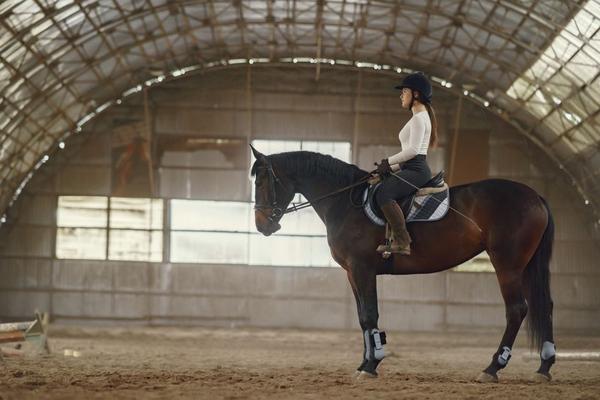
For everyday flatwork, the correct horse riding position is often described as a vertical line through the ear, shoulder, hip and heel. Treat this as a reference, not a rigid pose. Your body must adjust to the horse’s movement; jumping and light-seat work use different angles.
Ask an instructor to view you from the side at a halt. Your shoulders should sit broadly over your hips and your lower legs beneath you. From behind, check that you are not collapsing through one side of your waist or weighting one seat bone more heavily.
Build your position from head to heel
Head and eyes
Keep your head upright, chin comfortably level and eyes on the route ahead. Looking down at the horse’s neck often pulls your shoulders forwards. When turning, look along the line you intend to ride, not down at your inside hand.
Shoulders and torso
Imagine creating gentle space between your ribs and pelvis. Let your shoulders settle without squeezing your shoulder blades together. Avoid both an exaggerated arch and a rounded back. Your core supports your torso while still allowing you to breathe and adapt to each stride.
Seat and hips
Your riding seat position starts with a neutral pelvis. Feel both seat bones resting evenly in the saddle while your hips follow the movement. Tilting too far forwards hollows the back; tucking too far under rounds it and may push your legs forwards. Neither is a shortcut to stability.
At a calm halt, gently rock your pelvis a little forwards and backwards, then settle between those extremes. Have your instructor confirm that you are centred before repeating the awareness check at walk.
Legs, ankles and heels
Let your thighs rest against the saddle without clamping your knees. Keep your ankles supple and the balls of your feet correctly supported on the stirrups. Your heels should sit comfortably lower than your toes, but do not force them down by shoving your legs forwards.
A steady lower leg gives a deliberate aid and then returns to quiet contact. If your legs swing, consider whether you are gripping with your knees, overloading your stirrups or riding with unsuitable stirrup length.
Arms and hands
Keep your elbows softly bent near your sides. Let your hands follow the horse’s head and neck movement without pulling your torso forwards. Reins are for communication, not for holding yourself upright. Better rider alignment makes that independent contact easier.
How posture changes through the gaits
At walk, allow your hips to follow the horse’s alternating movement while your upper body remains supported. This is an ideal time to notice uneven weight or a heel creeping upwards.
At rising trot, rise and sit in a small, controlled rhythm instead of launching yourself out of the saddle. Let the horse’s movement help. If you tip forwards or catch yourself on the reins, return to walk and rebuild your balance. A separate guide to rising trot technique can help with timing.
Sitting trot and canter demand more movement through the pelvis, not tighter gripping. Develop these skills with a qualified instructor on an appropriate horse, progressing only when your balance is secure.
A practical three-point check for your next lesson
Imagine walking down the long side of an arena. Pick a point straight ahead, breathe out and ask yourself three questions: Are my eyes up? Is my weight even on both seat bones? Are my feet beneath my hips?
On the next long side, adjust only the area that felt least balanced. Perhaps your left knee was gripping or your right shoulder was creeping forwards. Ask your instructor to observe from the side and behind, or have someone safely record a short video from the ground. Seeing your horse riding form can reveal habits you cannot easily feel.
Repeat this brief check occasionally rather than analysing every stride. The aim is dependable balance, not constant self-correction.
Common mistakes and useful fixes
Legs pushed forwards
A chair-like seat can make you feel left behind the horse’s movement. Check saddle balance and stirrup length with your instructor before forcing your legs backwards. Soften your thighs and allow your legs to hang from the hips.
Gripping with knees
Clamping the knees often makes the lower leg unstable. Exhale, soften your thighs and notice whether your weight settles more evenly. Do not try riding without stirrups as a solo quick fix; attempt such exercises only under suitable supervision.
Stiff shoulders or hollow back
Instead of pulling your shoulders sharply backwards, grow gently taller through the crown of your head and keep your ribs over your pelvis. Frequent, relaxed resets work better than holding a strained position.
Check comfort and equipment too
Not every posture difficulty is a rider habit. An unsuitable saddle, incorrect stirrup length, discomfort, fatigue or restricted mobility can interfere with balance. Persistent pain or unevenness should be investigated rather than ridden through.
Wear a properly fitted riding helmet and suitable boots. Ask your instructor about tack adjustment and consult a qualified saddle fitter when appropriate. Learning basic horse riding safety and simple rider mobility exercises can support better choices between lessons.
Frequently asked questions
Should I lean backwards when riding?
Usually not during basic flatwork. Aim for a tall, balanced torso above your hips. Exaggerated leaning can disturb your seat, although specific movements and riding disciplines require different positions.
Why do my heels rise in the stirrups?
You might be gripping with your knees, shortening your leg to give an aid or bracing against the stirrups. Check ankle softness, leg contact and stirrup length with your instructor rather than forcing your heels down.
How can I stop bouncing?
Aim to follow the horse’s movement through relaxed hips and a supported torso. Improve balance at walk first and progress gradually with instruction instead of gripping to stay seated.
How long does better riding posture take?
There is no fixed timetable. Lesson frequency, existing habits, equipment and comfort all matter. Consistent small adjustments usually help more than trying to change everything at once.
Make balance your goal
Good horse riding posture should feel supported and responsive, not frozen. Begin with the ear–shoulder–hip–heel reference, release unnecessary tension and practise short checks at walk. Over time, a more secure seat helps you give clearer aids while allowing your horse to move comfortably.