Brushing a horse does more than make its coat look tidy. Proper grooming removes grit that could rub beneath a saddle and gives you a chance to spot changes in the skin. The key is using the right brush in the right place: a tool that lifts mud from a muscular shoulder may be uncomfortable on a face or bony leg.
If you are learning how to brush a horse, remember the basic order: loosen dirt, sweep it away, then finish gently. Adjust the sequence for your horse’s coat and comfort rather than treating every animal the same.
Prepare Your Horse and Grooming Tools
Choose a level, uncluttered area with secure footing. Approach from the shoulder while speaking so your horse knows you are there. A horse accustomed to tying can be secured with a suitable headcollar and safe quick-release arrangement. Ask an experienced handler to supervise if you are unsure. Wear sturdy footwear, and keep equipment where the horse cannot step on it.
Your basic set of horse grooming brushes should include a rubber curry comb, a firmer dandy brush and a soft body brush. Add a mane-and-tail comb, hoof pick and clean cloth. You do not need an expensive grooming kit to develop a good routine.
Know What Each Brush Does
The rubber curry comb loosens dry dirt and shedding hair with circular movements over muscular areas. The dandy brush removes the loosened debris. A soft body brush picks up fine dust and smooths the coat. When shopping for a body brush horse owners recommend, look at the softness of its bristles rather than the product name alone.
How to Brush a Horse Step by Step
1. Check the Coat Before Brushing
Look over the neck, back, belly and legs for cuts, swelling, scabs, lumps or rubbed areas. Gently check for unusual heat or a reaction to touch. Pay particular attention to places where the saddle and girth sit. If an area is painful or injured, do not brush over it. Seek veterinary guidance when you notice unexplained pain, significant swelling or concerning skin changes.
2. Loosen Dirt With a Rubber Curry Comb
Start at the neck or shoulder and use small, gentle circles over well-muscled parts of the neck, barrel and quarters. Move from front to back, occasionally clearing hair from the tool. Use lighter pressure on sensitive skin, and skip currying if the horse has been closely clipped or finds it uncomfortable.
Do not use a standard curry comb on the face, lower legs, prominent bones or sensitive flanks. If mud is wet and sticky, avoid grinding it into the coat. Where practical, let it dry before brushing, or clean the area by a gentler method. Metal curry combs are better reserved for cleaning suitable brushes rather than scraping the horse’s skin.
3. Remove Loosened Dirt With the Dandy Brush
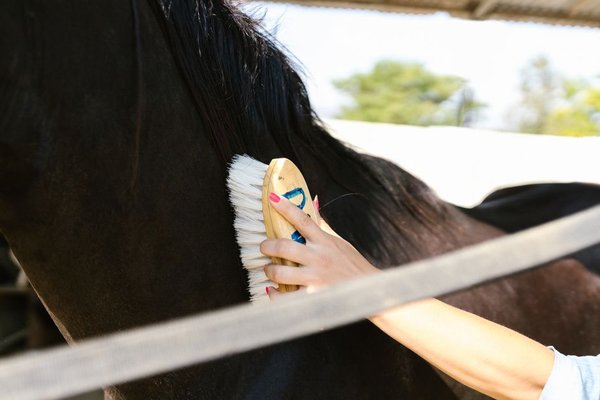
Brush in the direction of hair growth using short, flicking strokes. Work over the neck, shoulders, back, sides and quarters. Pay close attention to saddle-contact areas because grit beneath tack can cause rubbing. Remove collected hair from the brush frequently.
Firm bristles may be too harsh for a clipped horse, the face or delicate skin. For bony legs, switch to a softer brush and light strokes. It is better to leave a stubborn patch for gentler cleaning than to scrub hard enough to cause discomfort.
4. Finish With a Soft Body Brush
Use longer strokes following the hair’s natural direction to remove finer dust. Work slowly around contours. The coat should feel cleaner without needing sprays or polish.
On the face, use a particularly soft, clean brush or cloth. Introduce it gradually, avoid the eyes and nostrils, and stop if the horse becomes uneasy. Keep face-cleaning cloths separate from items used on dirty legs or other areas.
5. Gently Untangle the Mane and Tail
Start with your fingers to separate large knots. Hold a small section of hair above a tangle, then work upward from the ends using a suitable brush or wide-toothed comb. Pulling down from the roots can hurt and break hair.
Stand to the side rather than directly behind the horse when handling its tail. Pause if it clamps its tail or moves away. For longer coats, a guide to detangling a horse’s mane and tail makes a useful next read.
6. Clean and Check the Hooves
Coat brushing does not replace hoof care. If you have learned safe hoof handling, pick out packed debris carefully while avoiding sensitive structures. Look for stones, loose shoes, damaged hoof walls or an unusual smell. Seek help if the horse will not lift a foot safely. A guide to cleaning a horse’s hooves can explain the anatomy and technique in more detail.
Adjust Your Brushing to the Horse’s Needs
Imagine bringing in a horse from a damp paddock. Its shoulder is muddy, but its recently clipped belly is almost clean. Once the shoulder mud dries, a curry comb and dandy brush may be suitable there. The belly might need only a soft brush. Applying the same pressure to both areas would be unnecessary and potentially uncomfortable.
Notice pinned ears, a swishing tail, tightening skin, stepping away or attempts to nip. These may indicate discomfort. Ease your pressure, change brushes or stop to check for soreness. Some horses relax into brushing, while others prefer short sessions.
Before riding, make sure the back, girth area and other tack-contact points are free of grit. After exercise, deal with sweat gently and allow the horse to cool down. A daily horse care checklist can help you connect grooming with wider welfare checks.
Common Grooming Mistakes
Avoid using one stiff brush everywhere, forcing off stubborn mud, or repeatedly brushing against hair growth. These habits can irritate skin. Clean grooming equipment routinely, and avoid sharing brushes when a horse may have a contagious skin problem.
Never interpret a sudden dislike of grooming as simple bad behavior. A horse that reacts strongly when you reach its back may be sore. Investigate the change rather than pressing harder.
Frequently Asked Questions
What order should I use horse grooming brushes in?
Normally, start with a rubber curry comb on suitable areas, follow with a dandy brush, then use a softer body brush. Skip or adapt any step for delicate, clipped or already clean coats.
Can I use a curry comb on my horse’s face?
No standard curry comb should be used on the face. Choose a clean, soft face brush or cloth and work carefully around the eyes and muzzle.
How often should I brush my horse?
Groom according to the horse’s needs, living conditions and workload. Check regularly for injuries and skin problems. If you ride, clean areas touched by tack before each ride.
Should I brush off wet mud?
When practical, let mud dry before brushing. Scrubbing wet grit can irritate skin. If immediate cleaning is necessary, use a gentle approach and avoid wounds or painful areas.
Make Grooming a Comfortable Daily Habit
Work methodically, use softer tools where needed, and pay attention to the horse’s response. With practice, you will remove dirt more effectively while learning what is normal for your horse’s skin, coat and behavior.