
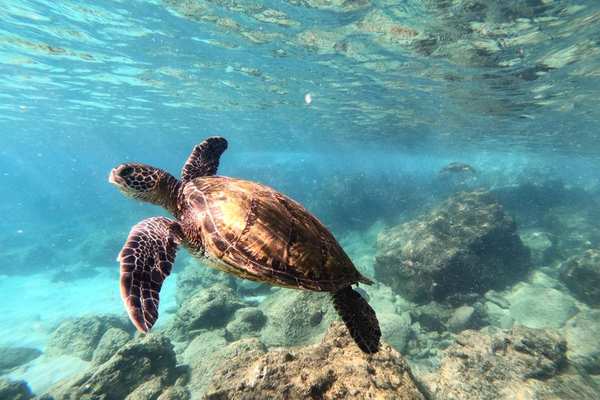
A sea turtle surfacing beside a British fishing boat sounds unlikely, yet sea turtles in UK waters are a genuine part of our marine wildlife. These long-distance travellers do not nest on British beaches, and most sightings are uncommon. One species, however, visits relatively regularly: the giant leatherback, which crosses the Atlantic to feed in our seas.
The surprising part is not simply that turtles reach Britain. It is that different species arrive for very different reasons. Some come to feed, while others have been carried far beyond waters where they can comfortably survive.
Which sea turtles have been recorded in UK waters?
The Marine Conservation Society identifies six marine turtle species recorded around Britain and Ireland. The list includes the leatherback, loggerhead, Kemp’s ridley, green turtle, hawksbill and olive ridley. That does not mean all six are commonly seen: several are exceptionally rare visitors.
Leatherback turtles: the regular ocean travellers
The leatherback turtle is the species most often recorded in British seas. Instead of a rigid, scaly shell, it has a flexible, dark back with distinctive lengthwise ridges. It is also the world’s largest living turtle. Its size, insulation and ability to generate heat through muscular activity help it forage in comparatively cold water.
A leatherback turtle in the UK is usually searching for jellyfish, particularly in productive waters off western and northern coasts. Unlike a stranded tropical turtle, a healthy leatherback may be exactly where it intends to be.
Loggerhead turtles and other hard-shelled visitors
Loggerheads have large heads, powerful jaws and reddish-brown shells. Young individuals occasionally turn up off British shores after travelling through the Atlantic. Kemp’s ridleys, usually associated with the Gulf of Mexico and western Atlantic, are also recorded, generally as juveniles.
Green and hawksbill turtles are much rarer. Green turtles typically favour warmer, shallow habitats, while hawksbills are closely associated with tropical reefs. An olive ridley has also been recorded, but its appearance is exceptionally unusual. The flatback, whose range is centred on waters around northern Australia, has not been recorded in UK seas.
Why do sea turtles travel so far north?
For leatherbacks, the answer is food. Their migrations can span entire ocean basins, linking tropical and subtropical nesting beaches with distant feeding grounds. Seasonal concentrations of jellyfish make parts of the northeastern Atlantic worth the journey.
For most other UK sea turtle species, reaching Britain is less advantageous. Juveniles spend years moving through oceanic waters, where currents and storms can redirect them. The North Atlantic’s interconnected current systems can transport small turtles towards northwestern Europe, sometimes into water too cold for their needs.
This distinction matters. A leatherback swimming strongly offshore is not necessarily lost. A small hard-shelled turtle lying motionless on a winter beach may be suffering from cold shock and needs urgent specialist attention.
Where and when are turtles seen around Britain?
Leatherbacks are especially associated with the Atlantic-facing coastlines of southwest England, Wales, western Scotland and nearby offshore waters. Sightings tend to cluster in the warmer months, particularly from late summer into autumn, although records can occur outside that period.
Look for a large, dark, ridged back breaking the surface rather than the raised dorsal fin of a dolphin. From a boat, a turtle may appear only briefly before diving. Even on a calm day, spotting one is a matter of luck rather than a reliable wildlife-watching opportunity.
Hard-shelled turtles may be noticed when they strand after rough weather, including during colder months. Location and season are useful clues, but they cannot establish a species by themselves. Photos taken from a safe distance are much more valuable than a hurried guess.
Records also help put rarity into perspective. In its 2025 wildlife sightings reporting, the Marine Conservation Society received twelve turtle reports: nine leatherbacks, one loggerhead and two unidentified turtles. Those are reports received by the charity, not a complete census of every turtle in UK waters.
What should you do if you spot a sea turtle?
If the turtle is swimming normally
Keep your distance, reduce boat speed if appropriate and never chase, surround or try to touch it. Note the date, approximate location, behaviour and distinguishing features. The Marine Conservation Society accepts sightings through its reporting scheme; a photograph can help experts confirm the identification.
If you find a turtle stranded or entangled
Call British Divers Marine Life Rescue on 01825 765546. Do not return a stranded hard-shelled turtle to the sea: cold-stunned animals can appear lifeless and require specialist care. Do not heat the animal rapidly or attempt an improvised rescue. Follow the rescue team’s instructions, keep people and dogs back, and avoid handling unless directed.
Imagine finding a small loggerhead on a Cornish beach in January. The kindest instinct might be to carry it into the surf, but that could expose it again to dangerously cold water. A prompt call, clear location details and a photograph give trained responders a much better chance of helping.
Why protecting visiting turtles matters
Even brief visits expose turtles to risks. Fishing lines and lost nets can entangle them; boat collisions can injure animals that must surface to breathe. Floating plastic is especially hazardous to jellyfish-eating leatherbacks because some debris resembles prey.
Cleaner beaches and responsible boating help, but useful conservation also starts with accurate records. Reports from residents, sailors and wildlife watchers reveal where turtles occur and when unusual strandings happen. Understanding jellyfish in British seas, ocean plastic pollution and marine food webs provides wider context for these encounters.
Frequently asked questions
Are there sea turtles in UK waters?
Yes. Six species have been recorded, although sightings are uncommon and leatherbacks account for the most regular visits. Most other species are occasional or exceptionally rare arrivals.
Do sea turtles lay eggs on British beaches?
Britain has no established nesting population of marine turtles. Species visiting UK seas generally nest on warmer beaches elsewhere, often thousands of kilometres away.
Can leatherback turtles survive cold British seas?
Yes. Their physiology allows them to feed in cooler water than most other marine turtles. That does not make all turtles cold-tolerant; small hard-shelled visitors can become dangerously chilled.
Should I put a stranded turtle back into the water?
No. In particular, a stranded hard-shelled turtle may be cold-stunned. Contact British Divers Marine Life Rescue immediately and follow professional instructions rather than attempting to release or warm it yourself.
A rare visitor worth noticing
Turtles around Britain tell two contrasting ocean stories: leatherbacks deliberately crossing vast distances for jellyfish, and young tropical turtles sometimes ending up far from suitable habitat. Knowing the difference makes a sighting more meaningful and a rescue response safer. If you are fortunate enough to see one, give it space and record what you observe. A few careful details can contribute to a much larger picture of marine life around the UK.