
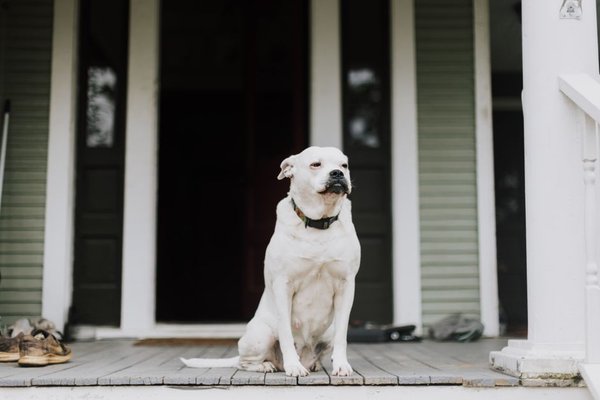
Hybrid work was supposed to mean dogs got more company, not less. But as more UK offices settle back into two or three days a week in 2026, thousands of dogs who got used to a lounge companion five days a week are suddenly facing empty houses again — and many of them are struggling. If your dog is one of them, you’ll already know the signs: the frantic barking the second you pick up your keys, the shredded cushion, the neighbour’s polite-but-pointed comment about the howling.
Separation anxiety in dogs isn’t naughtiness. It’s genuine panic, and it responds badly to punishment but very well to patient, structured training. Here’s what actually helps.
What Separation Anxiety Actually Looks Like
Not every dog that chews a shoe has separation anxiety — sometimes it’s boredom, sometimes it’s a puppy exploring the world with its mouth. True separation anxiety tends to show a specific pattern: the distress starts before you even leave, often as soon as you reach for your coat or car keys, and it’s concentrated in the first 20-30 minutes after you go.
Common signs of a dog left alone anxiety include:
Persistent barking or howling that starts almost immediately after you leave. Pacing, drooling, or panting that isn’t related to heat. Toileting accidents in a dog that’s otherwise fully house-trained. Attempts to escape through doors or windows, sometimes leading to self-injury. And, of course, the classic dog destructive when alone behaviour — chewed door frames, shredded bedding, or a bin turned inside out.
If you’re not sure whether it’s anxiety or simple mischief, a short video recording of the first 30 minutes after you leave will usually tell you everything you need to know.
Why 2026’s Hybrid Routines Are Making It Worse
Dogs are creatures of pattern. A dog who spent two years with someone home most days, then suddenly faces three solo weekdays because their owner’s hybrid schedule has shifted, hasn’t had time to build the confidence that comes with gradual exposure. The change feels abrupt to them, even if it’s been eased in gently from a human perspective. This is exactly why training has to move slowly — you’re essentially rebuilding a skill the dog never fully developed, or lost through underuse.
The Foundation: Gradual Desensitisation
Most UK vets and behaviourists point to the same core method: gradual desensitisation to being alone. The idea is simple, even if the execution takes patience. You’re teaching your dog, in tiny increments, that you leaving does not mean anything bad is about to happen.
Start With Seconds, Not Minutes
Begin by leaving the room, closing the door, and returning after just a few seconds — before your dog has a chance to become distressed. If they stay calm, gradually increase the time. The key is staying under their anxiety threshold at every stage; if you push too far too fast, you can undo days of progress in one bad session.
Decouple Your “Leaving Cues”
Dogs are excellent pattern-readers. They learn that keys, shoes, or a coat mean you’re about to disappear, and the anxiety often starts right there. Break the association by picking up your keys and then sitting back down. Put your coat on and make a cup of tea. Do this randomly throughout the day, with no actual departure attached, so those cues stop predicting panic.
Keep Departures and Returns Low-Key
It’s tempting to make a big fuss when you get home to an anxious dog, but excited greetings actually reinforce the idea that your absence was a big deal. Keep goodbyes and hellos calm and brief. A relaxed departure sets a relaxed tone for the whole time you’re out.
Crate Training an Anxious Dog
Crate training an anxious dog is often misunderstood — done properly, a crate isn’t confinement, it’s a den-like safe space the dog chooses to retreat to. The mistake most owners make is introducing the crate at the same time as the anxiety problem, which the dog then associates with being left. Instead, build positive crate associations completely separately from departures: feed meals in there, scatter treats inside throughout the day, and let your dog wander in and out freely with the door open.
Only once the crate feels like a genuinely comfortable spot should you start using it during short practice absences. For dogs with severe anxiety, particularly those prone to escape attempts, a crate can prevent injury — but it should never be forced on a dog that’s already distressed, as this can make the fear worse rather than better.
Practical Tools for Calming a Dog Left Alone
Alongside the core desensitisation work, a few supporting strategies genuinely help with calming a dog during solo time:
Mental enrichment before you leave. A short sniffing walk or a food-based puzzle toy tires the brain, not just the body, and dogs that are mentally settled tend to relax faster once alone.
Background noise. Leaving a radio or low-volume television on can mask sudden outside noises that might otherwise trigger a startled reaction.
Scent and comfort items. An unwashed item of your clothing in their bed can be genuinely reassuring — it keeps a familiar scent present even when you’re not.
Pheromone diffusers. Products containing dog-appeasing pheromone are widely available in the UK and, for many dogs, take the edge off background stress levels during training.
None of these replace the desensitisation training itself, but they make the process considerably easier for both of you.
When to Bring in Professional Help
Mild anxiety often improves within a few weeks of consistent practice. But if your dog is self-harming, escaping in ways that risk injury, or showing no improvement despite weeks of patient training, it’s time to loop in your vet. Severe separation anxiety sometimes needs a referral to a clinical behaviourist, and in some cases a short course of anti-anxiety medication alongside training can make the behavioural work far more effective. There’s no shame in this route — it’s often the fastest way to genuine relief for a dog that’s truly suffering.
Frequently Asked Questions
How long does it take to fix separation anxiety in dogs?
It varies enormously by dog and severity, but most owners following a consistent gradual desensitisation plan see noticeable improvement within 4-8 weeks. Severe cases can take several months, especially where professional or veterinary support is involved.
Should I get a second dog to help with separation anxiety?
Not usually as a first solution. Separation anxiety is typically about the human’s absence specifically, not just being alone, so a second dog doesn’t reliably fix it and can sometimes create two anxious dogs instead of one.
Is it cruel to crate train a dog with separation anxiety?
Not if it’s introduced correctly. A crate built up gradually as a positive, chosen space is very different from forcing a distressed dog into confinement, which can genuinely worsen anxiety.
Can separation anxiety in dogs go away on its own?
Rarely, and it more commonly gets worse without intervention, since the dog keeps rehearsing the panic response every time they’re left. Structured training gives the best chance of real, lasting improvement.
With hybrid schedules continuing to shift through 2026, this is a challenge more UK dog owners will face rather than fewer. The good news is that separation anxiety, however distressing it looks in the moment, is one of the more trainable behavioural issues out there — it just asks for patience, consistency, and a willingness to go slower than feels natural. Start small, celebrate the quiet wins, and your dog’s empty-house panic can genuinely become a thing of the past.