
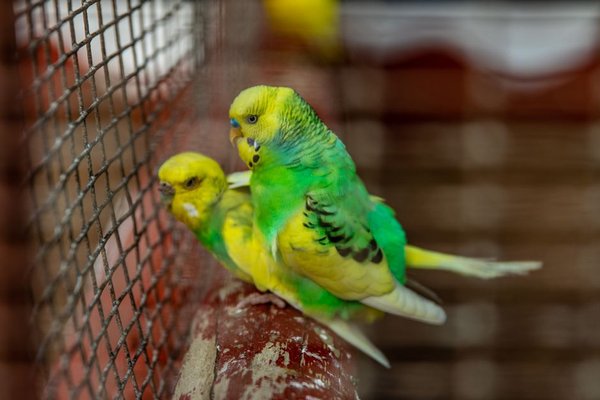
A budgie can seem cheerful one minute, perfectly still the next, and suddenly burst into noisy chatter. Those changes are not random, but they are not a simple mood dictionary either. Learning budgie body language means noticing posture, feathers, eyes, sounds and the situation together. You can then recognise when your bird welcomes company, needs space or may require medical attention.
Watch your budgie at ordinary times: after breakfast, during play and while settling for sleep. This gives you a personal baseline against which unusual behaviour becomes easier to spot.
Read the whole bird, not one gesture
One movement can have several meanings. A puffed-up budgie might be cosy, cold or unwell. Head bobbing can accompany enthusiasm or courtship. Before deciding what a signal means, ask three questions: What happened just before it? What is the rest of the body doing? Does your bird return to normal afterwards?
Interpret clusters of signals. Soft chatter, easy movement and gentle feather fluffing suggest something different from silence, persistent puffing and reluctance to move. Familiarity with your own bird matters more than memorising a single chart.
What budgie posture tells you
Relaxed, upright and comfortable
A comfortable budgie usually balances easily on a perch, moves without hesitation and shows interest in its surroundings. Resting with one foot tucked into the feathers can be normal, especially during a quiet period. Gentle beak grinding as the bird grows sleepy is another common relaxed behaviour.
Happy budgie signs often appear together: varied chirping, voluntary play, regular preening and curiosity about familiar people. A quiet bird is not automatically unhappy; some simply enjoy peaceful intervals.
Stiff, low or leaning away
A bird that freezes, crouches or leans away when a hand approaches may feel threatened. Sleeked-down feathers and quick escape attempts strengthen that interpretation. Instead of reaching farther into the cage, withdraw your hand and let the budgie decide whether to approach.
If the same budgie posture appears whenever a particular toy or person comes near, that trigger may be causing discomfort.
Feather movements: comfort or caution?
Budgies briefly fluff their feathers to rearrange them, conserve warmth or settle after preening. A quick shake followed by normal activity is usually unremarkable. Regular grooming and neat plumage generally suggest that a bird is attending to its usual needs.
Persistent puffing is different, particularly when accompanied by closed eyes, reduced activity, poor appetite or sitting low on a perch. Birds can hide illness, so these changes deserve prompt advice from an avian veterinarian rather than an assumption that the bird is merely sleepy.
Wings stretched on one side with a leg can be a normal stretch. Repeatedly holding wings away from the body, especially with panting, needs closer attention.
Eyes, beak and head movements
Bright eyes and changing pupils
An alert budgie watches movement, turns its head and tracks interesting objects. Some budgies show rapid pupil changes, called eye pinning, during heightened excitement or attention. This does not prove happiness or aggression on its own. Look for a relaxed or tense stance before approaching.
Beak grinding, wiping and opening
Soft beak grinding while settling down commonly accompanies contentment. Rubbing the beak against a perch after eating is often simple cleaning. An open beak directed towards an approaching finger, however, may be a warning when paired with lunging or a rigid body. Respect the warning instead of testing whether the bird will bite.
Repeated open-mouth breathing at rest is not ordinary communication. If breathing looks difficult, seek urgent veterinary help.
Head bobbing and regurgitation
Rhythmic head bobbing may occur during excitement, social interaction or courtship. Some birds bring up food during bonding behaviour. This should not be confused with uncontrolled vomiting, repeated distress or food scattered around the face. If you cannot tell the difference, ask an avian vet.
Budgie sounds meaning: listen for patterns
Gentle chirps, varied warbling and conversational chatter are common parts of budgie behaviour. A flock call may become louder when a companion leaves the room. A sudden sharp alarm call, especially with frantic flight or a rigid stance, suggests something has startled the bird.
Volume alone does not reveal mood. A lively budgie may be noisy while playing, while an anxious bird may also call repeatedly. Ask whether the vocalisation fits the activity and represents a change from normal.
Unexpected silence matters too. If a normally chatty budgie becomes unusually quiet and also stops playing or eating, treat the combination as a possible health warning.
Respond to the signal, then watch what happens
Imagine offering a finger for a step-up. Your budgie leans back, presses its feathers close to the body and turns away. Rather than pursuing it, lower your hand and offer a calm pause. Try again later, rewarding a voluntary approach. If the bird relaxes when you retreat, you have learned something about its comfort boundary.
Use the same method when introducing a new perch or toy: place it at a distance, observe the reaction and allow gradual exploration. For more context, explore budgie cage setup and how to tame a budgie.
Keep a brief record of when the bird chats, rests, feeds and plays. Changes become clearer when you know its usual rhythm. Budgie diet basics can also help you connect feeding behaviour with daily care.
When body language may signal illness
Behaviour reading should never replace a health check. Contact an avian veterinarian promptly if your budgie stays fluffed and inactive, loses interest in food, has markedly different droppings or struggles to perch. Tail bobbing in time with breathing, wheezing or open-mouth breathing at rest can indicate respiratory difficulty and warrants urgent assessment.
After vigorous flight, breathing may briefly become faster; it should settle. Do not wait for multiple warning signs if your bird appears distressed. A bird that suddenly acts unlike itself deserves attention even when the change seems subtle.
Frequently asked questions
How can I tell if my budgie trusts me?
A budgie that voluntarily approaches, eats comfortably nearby or remains relaxed during your presence may be developing trust. Stepping away or declining a finger is a useful signal, not a setback.
Why does my budgie puff up when I talk?
Brief fluffing can occur during relaxation or feather adjustment. Check whether your bird keeps chatting and moving normally. If it remains puffed up and unusually quiet, consider illness rather than interpreting the gesture as affection.
Does head bobbing always mean my budgie is happy?
No. Head bobbing may accompany excitement, courtship or other social behaviour. Watch posture, sounds and what triggered the movement before drawing conclusions.
Why is my budgie suddenly silent?
It may be resting or responding to a change nearby, but unexpected silence with reduced appetite, inactivity or breathing changes is concerning. Seek prompt veterinary guidance if the change persists or your bird seems unwell.
Understanding your budgie over time
The best interpretation comes from patterns, not isolated gestures. Watch what happens before a signal, respond gently and notice whether your budgie settles or becomes more tense. With that habit, budgie body language becomes a guide to safer handling, richer interaction and earlier recognition of problems.