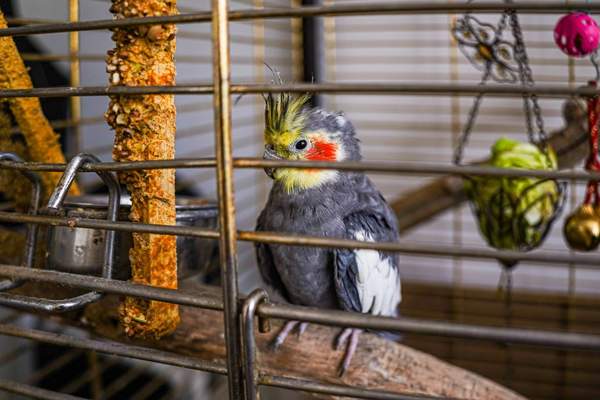
Cockatiels are affectionate, curious birds with a knack for whistling and an expressive crest. They are often described as easy pets, but their needs go beyond a bowl of seed and a tidy cage. A useful cockatiel care guide for UK homes must cover flight, companionship, sleep and everyday hazards as well as feeding.
These Australian parrots thrive on familiar routines with opportunities to explore. The goal is a home where natural bird behaviours are possible every day, not simply a comfortable place to perch.
What should a cockatiel eat?
A seed-only diet is a common mistake in cockatiel care. Birds may pick out favourite fatty seeds while missing essential nutrients. The RSPCA advises providing suitable pellets, fresh vegetables and fruit, with seeds making up only a small share of the daily diet.
Choose a formulated food for cockatiels or small parrots. Offer washed carrot, broccoli, peppers and leafy greens; give fruit in modest portions. Millet and seeds are useful as measured treats for training rather than unlimited meals.
Fresh water must always be available. Wash dishes daily and remove produce before it spoils. If your bird currently eats only seeds, introduce pellets gradually, ideally with guidance from an avian vet. Never assume a bird is eating a new food just because it has been offered.
Keep avocado, chocolate, alcohol, caffeine and onion away from your cockatiel. Avoid salty human snacks. Checking what is actually eaten is more helpful than merely topping up a bowl.
Setting up safe cockatiel housing
Think of a cage as a secure bedroom and feeding station, not the bird’s entire world. Select the largest practical rectangular cage, with appropriate bar spacing and enough clear room for wings and tail. Larger enclosures and regular flight opportunities support healthier movement.
Finding the right place for the cage
Choose a sociable, relatively peaceful room, positioning the cage against a wall to provide security. Avoid cold draughts, radiators, open windows, direct midday sun and kitchens. During a British winter, stable indoor conditions are preferable to placing the cage beside a heater.
Use natural wooden perches of different widths, placed away from food and water bowls. Add shreddable toys, a swing and simple foraging activities without overcrowding the space. Introduce unfamiliar toys gradually: some cockatiels are wary of sudden changes.
Before setting up, review bird-safe houseplants and other household hazards, particularly if children or other pets share the room.
Flight and exercise are daily essentials
Flying is not an optional treat. The RSPCA recommends at least six hours of safe out-of-cage flight daily for birds housed in indoor cages. A suitably spacious and secure aviary can also provide valuable flying room. Time spent sitting on a shoulder does not replace this exercise.
Close windows and doors, cover large mirrors, turn off ceiling fans and exclude cats and dogs before opening the cage. Remove exposed cables and unsafe plants. Never allow flight into a kitchen with hot pans or cooking fumes.
Overheated non-stick equipment containing PTFE can release fumes fatal to birds. Smoke, aerosols and strong fragrances are also unsuitable around them. Avoid clipping wings as a routine means of preventing escape; secure rooms and training are safer ways to manage flight.
Companionship and understanding behaviour
Cockatiels are flock-living birds. Many benefit from a compatible cockatiel companion, with ample space and introductions conducted gradually under supervision. Human contact matters, but a radio or mirror cannot provide the same relationship as another bird.
A contented cockatiel may whistle, preen or quietly grind its beak. Hissing, lunging or a flattened crest can indicate discomfort. Let your bird approach voluntarily and reward calm stepping up instead of grabbing or chasing.
For variety, try pet bird enrichment ideas such as hiding a few pellets in folded clean paper or providing safe cardboard to shred.
Sleep, bathing and grooming
Most cockatiels benefit from around 10 to 12 hours of dark, quiet rest each night. A late-night television or bright living room can disrupt sleep even if the cage is covered. Establish a consistent bedtime and never block ventilation with a cover.
Some birds experience night frights and flap suddenly in darkness. A dim night light may help, especially if the room has unfamiliar shadows or noises. Frequent episodes warrant veterinary advice.
Offer a shallow bathing dish or gently mist feathers with plain, room-temperature water earlier in the day. Do not use soap. Natural perches support foot health, while an avian vet can assess overgrown nails. Never attempt to trim growing blood feathers.
A manageable cockatiel daily routine
Consider a household that leaves for work at 8 am and returns after 6 pm. A few hurried minutes before breakfast will not provide enough company or flight. Such households need a realistic arrangement for companionship and a safe, spacious environment, or may need to reconsider keeping a cockatiel.
Where someone is regularly at home, this pattern can work:
Morning: replace water, offer pellets and vegetables, check droppings and open the bird-safe flight area.
Daytime: provide extended flight, companionship, a small foraging task and quiet opportunities to rest.
Evening: remove leftovers, clean soiled surfaces, check food intake and settle the bird at a predictable time.
Spot-cleaning daily is easier and healthier than allowing droppings to build up. Wash dirty toys and perches as needed, and schedule regular thorough cage cleaning with bird-safe products.
Health checks and veterinary care
Locate an avian-experienced UK veterinary practice before an emergency arises. Cockatiels can hide illness, so subtle changes deserve attention. Weigh your bird on a gram scale regularly, at a consistent time, to notice trends hidden by feathers.
Contact a vet promptly for appetite loss, persistently fluffed feathers, unusual droppings or weakness. Open-mouth breathing, collapse, serious bleeding or suspected toxic-fume exposure requires emergency care. An annual health assessment is also sensible.
Frequently asked questions
Are cockatiels good pets for beginners?
They can be for owners prepared to provide a large enclosure, safe daily flight, social contact, balanced feeding and specialist veterinary care. Friendly does not mean low-maintenance.
Can a cockatiel live on its own?
Some single birds bond closely with people, but cockatiels are naturally social. A compatible bird companion can help meet those needs, especially when humans are away.
How often should a cockatiel cage be cleaned?
Change water, wash food dishes and remove droppings every day. Clean soiled furnishings promptly and complete deeper cleaning regularly.
How long can a pet cockatiel live?
Many live into their teens, and some reach their twenties with good care. Plan for a long-term commitment rather than a short-lived starter pet.
Making cockatiel care sustainable
Good care comes from details repeated daily: varied food, clean water, safe flying space, companionship and reliable sleep. Build a routine your household can genuinely maintain, then adapt it as your bird’s behaviour and needs change.