The XL Bully ban rules in the UK are no longer limited to muzzles, leads and exemption paperwork. A new child-safety condition takes effect on 1 November 2026. From that date, a child under 12 must not be left in close contact with an XL Bully in a private place, such as a home or garden, without adult supervision.
The change applies to prohibited dog types in England and Wales, Scotland and Northern Ireland. However, each nation manages exemptions through a different authority. The essential point is the same: a Certificate of Exemption stays valid only while every condition is followed.
What the XL Bully ban means in 2026
Across the UK, it is illegal to own an XL Bully without a valid exemption certificate. In Great Britain, the restrictions sit within the Dangerous Dogs Act 1991 framework, while Northern Ireland uses its own dog-control legislation. The original owner-led application windows have closed. In England, Wales and Scotland, new exemptions can only be authorised through a court process; Northern Ireland owners without a certificate should contact their local council.
The restrictions also make it an offence to sell, give away, abandon or breed from an XL Bully. An owner cannot simply transfer the dog to a friend or relative if circumstances change. Anyone keeping an XL Bully without valid exemption status should contact the police in England and Wales, the appropriate authority in Scotland, or the local council dog-control service in Northern Ireland.
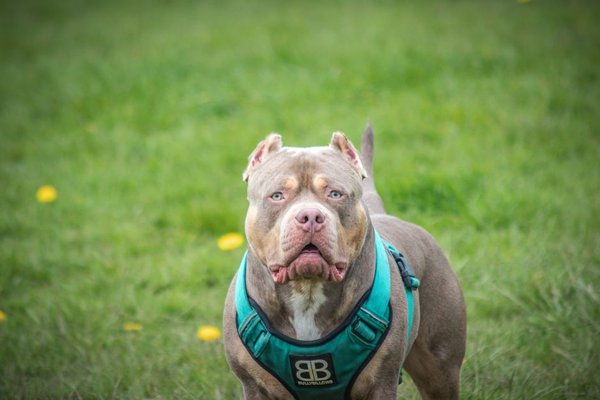
Identification is based mainly on physical characteristics rather than the breed name written on paperwork. A dog may therefore be treated as an XL Bully type even if it was sold or registered under another description. Our guide to banned dog breeds in the UK provides useful background on type-based restrictions.
The new child-supervision rule from 1 November 2026
From 1 November 2026, owners must not leave a child under 12 in close contact with an exempted XL Bully in a private place without adult supervision. A private place includes obvious settings such as the family home or garden.
The practical message is that a responsible person must remain present and able to supervise. Leaving a child and dog together in another room while an adult is elsewhere in the house would not be a safe approach. Scotland’s published guidance expressly says the supervising person must be aged 16 or over. Guidance for England, Wales and Northern Ireland uses the term adult supervision, with further practical guidance expected before the start date.
Consider a common scenario: an owner is preparing dinner while an eight-year-old plays in the garden with the dog. After 1 November, the safer arrangement is to have a responsible supervising person present in the garden or to separate the child and dog securely until direct supervision is available.
This is a legal condition for banned dog types, but it is sensible safety practice around every dog. Children can misread warning signals, approach a resting dog or interrupt feeding without understanding the risk.
Current Certificate of Exemption duties
A certificate of exemption dog must continue to meet the conditions attached to the exemption throughout its life. Missing a requirement can invalidate the exemption and expose the dog to seizure and the owner to prosecution.
Lead and muzzle rules in public
An exempted XL Bully must be kept on a lead and muzzled in public. The lead must be securely held by someone aged at least 16. A properly fitted muzzle should allow the dog to pant, drink and breathe comfortably. Gradual, reward-based training is safer than introducing a muzzle immediately before a walk. Our how to muzzle train a dog guide can help owners build that routine.
Secure accommodation and address limits
The dog must be kept securely so it cannot escape. Gates, fencing, doors and outdoor enclosures should be checked regularly. The dog normally needs to live at the certificate holder’s registered address, although temporary stays at another address are generally limited to 30 days in any 12-month period.
A permanent address change must be reported to the correct authority. In England and Wales this is Defra or the Index of Exempted Dogs, in Scotland it is the Scottish Government exemption team, and in Northern Ireland it is the relevant local council.
Microchipping, neutering and official checks
The dog must be microchipped and neutered, with the required evidence supplied under the exemption process. If an authorised officer asks, the owner must allow access to scan the microchip. A copy of the exemption certificate must normally be produced within five days of a valid request.
Owners must also report if the dog dies or is exported. Keep the certificate, microchip details, veterinary records and copies of address-change correspondence somewhere accessible.
Insurance rules changed in July 2026
Third-party public liability insurance stopped being a Certificate of Exemption requirement from 1 July 2026. Owners had to maintain suitable cover up to and including 30 June 2026, but that legal condition has now been removed across England and Wales, Scotland and Northern Ireland.
This does not remove an owner’s responsibility for injury or damage caused by the dog. Voluntary cover may still be worth exploring where available, alongside a responsible dog ownership checklist covering secure housing, training and emergency planning.
What happens if an owner breaks the rules?
Failure to follow an exemption condition can mean the dog is no longer lawfully exempt. Enforcement may include seizure, prosecution and a court decision about the dog’s future. Penalties and procedures vary between UK nations, so owners should rely on current official guidance rather than old social-media posts.
Treat compliance as an ongoing routine. Review the registered address, certificate storage, muzzle fit, lead handling, microchip record and home security regularly. Before 1 November 2026, households with children should agree who will supervise and how the dog and child will be separated when supervision is unavailable.
Frequently asked questions
Can I apply for an XL Bully Certificate of Exemption in 2026?
The general owner-led application schemes are closed. A new exemption may only be available through a court-authorised process, depending on the circumstances and nation involved. Seek official guidance immediately if the dog lacks valid exemption status.
Does the child-supervision rule apply before 1 November 2026?
The new certificate condition starts on 1 November 2026. Until then, owners should still never leave a young child unsupervised with any dog.
Does an XL Bully still need insurance?
Third-party public liability insurance is no longer a legal exemption requirement from 1 July 2026. Other duties, including microchipping, neutering, secure keeping, public lead use and muzzling, remain in force.
Can someone else walk an exempted XL Bully?
Yes, provided the person can safely control the dog and is at least 16 years old. The dog must stay securely on a lead and properly muzzled in public.
Keeping an exemption valid
The XL Bully owner rules in 2026 combine established controls with a significant new child-safety duty. The insurance requirement has ended, but the remaining exemption conditions continue, and the supervision rule begins on 1 November. Owners should update household routines, confirm who can supervise and create secure separation arrangements. Careful preparation protects children and helps keep the Certificate of Exemption valid.