On a dark ocean night, a breaking wave can sparkle electric blue. Far below, a fish may carry a glowing lure over its teeth, while a squid disappears beneath a controlled wash of light. These displays are practical tools for survival.
Bioluminescent marine animals produce light through chemical reactions, either within their own tissues or with help from luminous bacteria. Their glow can attract dinner, conceal a silhouette, confuse an attacker or send a message. To understand why ocean creatures shine, ask: who is supposed to see the light?
How Marine Animals Make Light
Bioluminescence is living light created by chemistry, not by storing sunshine. Typically, a light-producing molecule called luciferin reacts with oxygen. In many organisms, an enzyme called luciferase helps the reaction happen. Other species use specialised light-producing proteins. The process releases relatively little heat compared with an ordinary lamp.
Some animals make the necessary chemicals themselves. Others employ microscopic partners. Certain deep-sea anglerfish, for example, house luminous bacteria inside a specialised lure. The bacteria provide light, while the fish provides a place for them to live.
Light organs called photophores can give an animal control over the display. Depending on the species, they may form dots, stripes or clusters and help direct or regulate the glow. Marine bioluminescence is more than a simple on-off switch.
Why So Much Ocean Light Looks Blue
Blue and blue-green wavelengths travel particularly well through seawater, so they dominate underwater light displays. At depth, sunlight fades and colours disappear unevenly. A blue flash can remain visible where red light would be absorbed over a shorter distance.
There are exceptions. Some deep-sea dragonfishes can emit red light, which may help them illuminate prey without advertising their presence to many nearby animals. Their unusual visual abilities make this a specialised hunting advantage.
Bioluminescence should not be confused with biofluorescence. A fluorescent animal absorbs incoming light and re-emits it at another wavelength; a bioluminescent one generates light chemically. That difference matters when looking at photographs of glowing sea creatures taken under ultraviolet or blue lamps.
Remarkable Bioluminescent Marine Animals
Anglerfish: A Lure in the Darkness
Some female deep-sea anglerfish dangle a luminous tip from a modified fin spine above their mouths. Prey may investigate the glowing point and come dangerously close to sharp teeth. In species with bacterial light organs, the glow comes from symbiotic microbes.
Lanternfish: Light Along the Belly
Lanternfish carry arrangements of photophores that can help with recognition and camouflage. When viewed from below, an animal blocking faint downwelling light forms a dark outline. A matching glow from its underside can reduce that contrast, a technique called counterillumination.
Hawaiian Bobtail Squid: Borrowed Camouflage
This small, shallow-water squid cultivates luminous bacteria in a dedicated light organ. Their glow helps disguise the squid’s shadow against moonlight or starlight from above. It is an example of two organisms cooperating to solve a visibility problem.
Firefly Squid: Tiny Moving Constellations
Firefly squid have numerous photophores and are famous for blue displays associated with seasonal appearances near Japan’s Toyama Bay. Their light is thought to have several roles, including communication and defence. The exact meaning of every pattern is not fully established.
Flashlight Fish: Living Headlamps
Flashlight fish shelter glowing bacteria in organs beneath their eyes. Specialised structures let them conceal or expose the light, creating intermittent flashes. These signals may assist with feeding, schooling and communication, though their functions vary among species.
Atolla Jellyfish: An Alarm in the Water
When disturbed, some Atolla jellyfish produce a striking pattern of light. Researchers interpret such defensive displays as possible burglar alarms: a flash may draw a larger hunter toward the animal attacking the jellyfish. The strategy turns unwanted attention into an escape opportunity.
Why Glowing Can Be Better Than Hiding
Hunting: Light Becomes Bait
In the deep ocean, food encounters can be rare. A concentrated luminous signal can draw curious prey into striking range, as with anglerfish. Other predators use light to inspect nearby objects. The same glow that reveals one animal may help another capture a meal.
Defence: Flash, Distract, Escape
A sudden burst of light can startle a predator or make it lose track of its target. Some squid and shrimp release glowing material into the water, leaving a bright distraction while they flee. Other animals may attract the attacker’s enemies with a conspicuous signal.
Camouflage: Erasing a Silhouette
Producing light can make an animal harder to see. Against the faint brightness above, a dark belly stands out. Counterillumination allows certain fish and squid to blend with that background. The amount and direction of light matter as much as its colour.
Communication: Finding the Right Audience
In a vast, dim habitat, signals can help animals identify mates or members of their species. Some tiny marine crustaceans called ostracods release glowing material in distinctive courtship patterns. For them, a sequence of lights works less like a torch and more like a message.
Why Beaches Sometimes Sparkle at Night
Not every glowing ocean organism is an animal. Many coastal displays come from single-celled dinoflagellates, which are planktonic protists. As waves break or a kayak moves through the water, mechanical disturbance can trigger brief blue flashes. The individual cells are tiny; together they can make an entire wake shimmer.
To witness this phenomenon, choose a location with documented sightings, visit after dark when conditions are suitable, and look from a safe shore or an organised tour. Minimise artificial light to let your eyes adjust. Avoid stirring up wildlife for photographs, and follow local advisories: some plankton blooms can coincide with harmful water conditions.
A useful clue is the pattern. Fleeting sparkles that trace splashes are often produced by disturbed plankton, whereas steady light from a visible fish or squid may come from dedicated organs. Neither observation alone identifies a species, but it changes what to look for next.
Frequently Asked Questions
Are all deep-sea animals bioluminescent?
No. Bioluminescence is widespread among animals in the open ocean, especially at midwater depths, but many species do not produce light. Its prevalence varies across habitats and groups.
Do jellyfish really make their own light?
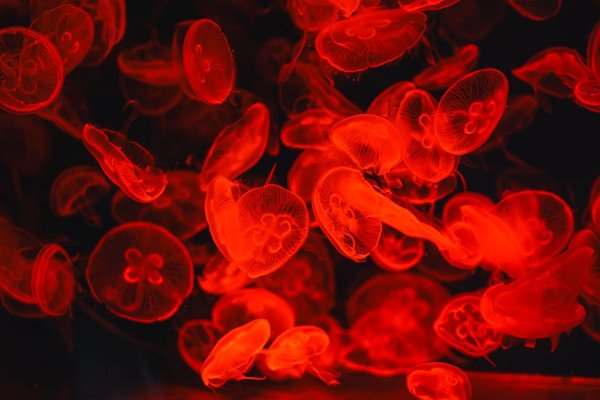
Some do. Certain jellyfish produce bioluminescent flashes, while others are better known for fluorescence under external illumination. A colourful photograph alone does not prove which process is involved.
Can people see marine bioluminescence without diving?
Yes. Coastal plankton displays can sometimes be observed from shore or from boats and kayaks. Sightings depend on local organisms, water conditions, darkness and seasonal changes.
Why is bioluminescence useful in deep water?
Where sunlight is weak or absent, light helps some animals find food, signal to others, evade predators or camouflage themselves. Its value depends on who sees the glow and what happens next.
The Ocean’s Light Has a Purpose
These flashes and patterns are not decorations in a dark landscape. They are responses to life in water where visibility, distance and danger shape behaviour. From a squid hiding its shadow to a jellyfish broadcasting an alarm, deep sea adaptations show that light can be both a signal and a disguise.
The next time a wave glitters blue, remember that you are seeing just one expression of a larger underwater language.