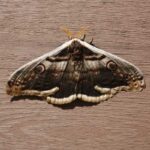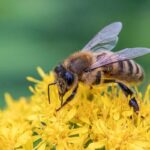
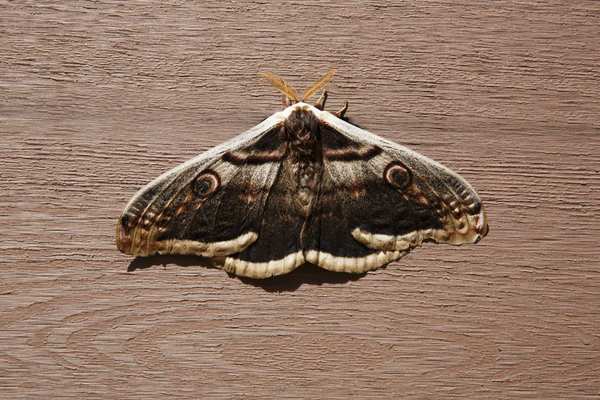
At a glance, the difference between a moth and a butterfly can seem obvious: butterflies are bright, day-flying visitors to flowers, while moths are brown insects that appear around lights after dark. In reality, the two groups are much closer than those stereotypes suggest. Both belong to the insect order Lepidoptera, meaning “scale-winged”, and many familiar identification rules have exceptions.
That does not make moth and butterfly identification impossible. Antennae shape, resting posture, activity and wing structure can all help, especially when you use several clues together rather than relying on one.
The clearest clue is often the antennae
For everyday identification, antennae are a good place to start. Most butterflies have antennae ending in a noticeable club or thickened tip. Many moths instead have antennae that are thread-like, tapering or feathery.
Feathery antennae are a particularly strong clue in Britain because UK butterflies do not have truly feathery antennae. Male moths of some species use enlarged, comb-like antennae to detect tiny amounts of female pheromone in the air.
The rule is not absolute. Burnet moths have antennae that can look distinctly clubbed, while skipper butterflies can have hooked or less obviously clubbed tips. If the antennae look ambiguous, check the other features before deciding.
Resting wing position helps, but it is not foolproof
Butterflies commonly rest with their wings held upright and closed together over the back. Many familiar moths sit with their wings flat, roof-like or spread to the sides. That makes resting posture a useful field clue when the insect stays still long enough for a clear look.
There are exceptions. Some geometrid moths hold their wings raised or angled, and skipper butterflies often adopt a partly open position that does not match the classic butterfly pose. A better method is to treat wing position as supporting evidence. Clubbed antennae plus upright wings strongly suggest a butterfly; feathery antennae plus flat wings strongly suggest a moth.
Are butterflies always active by day and moths by night?
No. This is one of the most familiar moth butterfly differences, but it is only a broad tendency. Butterflies are mainly associated with daylight, while many moths are nocturnal. Britain also has numerous day-flying moths, including cinnabar, burnet and some tiger moths.
Day-flying moths can easily be mistaken for butterflies because they may be brightly coloured, visit flowers and fly in warm sunshine. Conversely, some butterflies can be active in unusual conditions, and Red Admirals have been recorded flying at night during migration.
If an insect is flying after dark, a moth is the more likely answer. If it is flying in sunshine, it could belong to either group. Time of day narrows the possibilities but does not settle the identification.
Colour and body shape are weaker clues than they look
Butterflies have a reputation for vivid colours, while moths are often imagined as grey or brown. British wildlife quickly disproves that idea. Cinnabar moths carry bold red and black markings, Six-spot Burnets are dark with red spots, and several tiger moths are strikingly patterned.
There are also butterflies with muted brown, grey or cream colouring. Camouflage, warning signals and mate recognition influence wing patterns across Lepidoptera, so colour alone is not a dependable way to separate moths from butterflies.
Body hairiness is similarly unreliable. Many moths look furry, but butterflies also have scales and hair-like structures, especially around the thorax where the flight muscles sit. Some moths look relatively sleek.
A hidden structural difference
One of the more consistent differences is difficult to see without close examination. Nearly all moths have a tiny coupling structure, often called a frenulum, that helps connect the hindwing and forewing during flight. Butterflies generally lack it.
This feature can help specialists examining specimens, but it is not practical for most garden observations. Trying to inspect a live insect closely enough to see it may also cause unnecessary disturbance, so visible field characters are better for routine moth identification.
The life cycle is more similar than different
Both moths and butterflies undergo complete metamorphosis: egg, larva, pupa and adult. Their larvae are caterpillars, and both groups often depend on particular food plants. Adults mainly disperse and reproduce, although many species also feed on nectar or other liquids.
You may hear that moths make cocoons while butterflies form chrysalises, but that is too simple. Some moth larvae spin silken cocoons around the pupa, while others pupate in soil, leaf litter or exposed places. The basic four-stage life cycle is shared across the group.
A practical way to identify what you have found
Imagine you notice a red-and-black insect feeding on flowers on a sunny June afternoon. Daylight and bright colour might make you think “butterfly”, but those clues are not enough. Check the antennae and resting posture. If the antennae are club-like and the wings sit roof-shaped over the body, you may be looking at a burnet moth.
Now imagine a brown insect resting on a fence with its wings closed upright. That posture may suggest a butterfly, but you should still check the antennae and pattern before deciding. Taking a clear photograph from above and from the side, without handling the insect, makes later comparison with a trusted UK identification guide much easier.
Natural internal-link opportunities include butterfly identification guide, common UK moths, and butterfly and moth life cycle.
FAQ
What is the easiest way to tell a moth from a butterfly?
Check the antennae first. Most butterflies have clubbed tips, while most moths have tapering, thread-like or feathery antennae. Then confirm your impression using resting posture and activity time.
Can moths be colourful?
Yes. Many UK moths are brightly coloured or strongly patterned. Cinnabar, burnet and tiger moths are good examples, so colour alone should never be used to separate moths from butterflies.
Do all moths fly at night?
No. Many moth species are active during the day, and some frequently visit flowers in sunshine. Night-time activity strongly points towards a moth, but daytime activity can indicate either group.
Are moths and butterflies closely related?
Yes. Both are members of Lepidoptera and share the same basic four-stage life cycle. The everyday division between “moths” and “butterflies” is useful, but the biological boundary is less simple than the usual stereotypes suggest.
Getting the identification right
The most reliable answer to moths vs butterflies is not a single trick but a combination of clues. Antennae are usually the strongest visible feature, while resting position, activity time, colour and body shape add supporting evidence. Remembering the exceptions is part of good identification.
Once you stop expecting every butterfly to be bright and every moth to be brown and nocturnal, the comparison becomes far more interesting. It also reveals how diverse British Lepidoptera are, from tiny micro-moths to familiar garden butterflies, all sharing the same remarkable scaly-winged heritage.