Bumblebees and honey bees are often grouped together as familiar striped pollinators, but they live surprisingly different lives. The quickest way to tell them apart is to look at body shape, hairiness, nesting habits and colony activity rather than colour alone. Bumblebees are usually chunkier and visibly fuzzier, while honey bees tend to be slimmer with a more compact brown or golden-banded appearance. Once you know those clues, bee identification becomes much easier.
Appearance: the easiest place to start
Bumblebees generally have broad, rounded bodies covered in dense hair. Their colours vary by species and can include yellow, white, buff, orange, red or ginger, so “black and yellow” is only a rough description. In the UK, tail colour and banding pattern are useful clues when identifying different bumblebees.
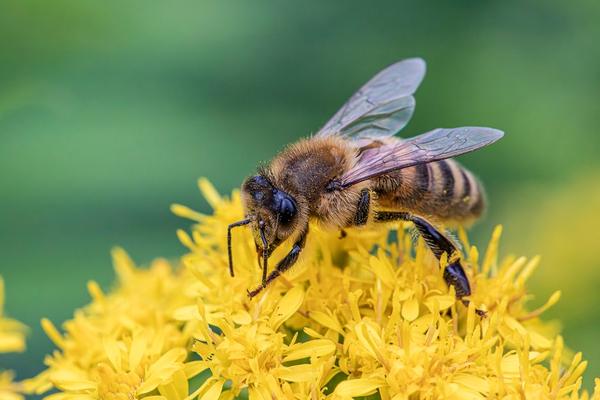
Honey bees are usually smaller and more streamlined. They are commonly brown, amber or golden-brown with darker bands across the abdomen. Honey bees are hairy too, especially around the thorax, but they normally look less thickly furred than bumblebees. Their abdomen also tends to appear more tapered and clearly segmented.
A practical tip is to ignore colour at first. If the bee looks round, plush and almost teddy-bear-like, it is more likely to be a bumblebee. If it looks slimmer, neater and more uniformly brown-gold, a honey bee is a stronger possibility. Shape is often a better first clue than stripe colour.
Colony size and life cycle
Most familiar bumblebees are social, as are honey bees, but the scale of their colonies is very different. A bumblebee nest is comparatively small. At peak strength in summer, it may contain roughly 50 to 400 workers, depending on the species and conditions. Most bumblebee colonies last for only one season.
A queen bumblebee usually emerges in spring, finds a nest site and raises the first workers herself. Once they mature, the workers take over much of the foraging while the queen concentrates on laying eggs. Later, new queens and males are produced. In most species, the old colony dies off and newly mated queens overwinter alone before starting new colonies the following year.
Honey bee colonies can be far larger, sometimes reaching tens of thousands of bees and around 60,000 in a strong colony. They also normally survive winter as a group. Stored honey provides energy when flowers are scarce, allowing the colony to continue from one year into the next.
Where do they nest?
Bumblebee nesting sites vary. Some species use abandoned rodent holes underground, while others may choose dense grass, compost heaps, cavities, sheds, loft spaces or bird boxes. Their nests are usually small and seasonal.
Honey bees build wax comb in sheltered cavities. Managed colonies live in beekeepers’ hives, while feral colonies may occupy hollow trees, chimneys or spaces inside buildings. Their comb contains cells for brood, pollen and honey storage.
Imagine spotting bees near a garden shed. A few large, furry bees repeatedly disappearing into a small hole beneath the shed would suggest a bumblebee nest. A steady stream of many slimmer bees entering a substantial wall cavity would make honey bees more likely. In either case, watch from a comfortable distance and avoid blocking the entrance.
Feeding and pollination behaviour
Both bumblebees and honey bees collect nectar for energy and pollen to feed developing young. As they move between flowers, pollen can stick to their bodies and be transferred to other blooms, making both important pollinators.
One of the most interesting bumblebee differences is buzz pollination. Bumblebees can grip certain flowers and vibrate their flight muscles, shaking loose pollen that is otherwise difficult to release. This makes them especially effective on plants whose flowers respond to vibration.
Honey bees do not use buzz pollination in the same way, but their large colonies can send out huge numbers of foragers. Individual honey bees may also repeatedly visit the same type of flower during a foraging trip, helping move pollen between matching flowers efficiently.
Honey production is a major difference
Honey production is one of the clearest honey bee differences. Honey bees convert nectar into honey and store substantial amounts in wax comb. These reserves help sustain the colony through periods of poor forage, particularly during winter.
Bumblebees also collect nectar and can store small quantities of food in the nest, but they do not build the extensive long-term honey reserves associated with honey bee colonies. Their annual life cycle means they do not need to feed a full colony throughout winter.
Behaviour around people
Neither type of bee should be considered aggressive simply because it is flying nearby. Foraging bumblebees and honey bees are usually focused on flowers and generally leave people alone unless they are handled, trapped or threatened. Nest entrances deserve more space because bees may defend their colony if it is disturbed.
Behaviour can provide extra identification clues. Bumblebees often look heavier in flight and produce a deep, noticeable buzz. Honey bees can appear more streamlined and purposeful as they move between flowers or return to a colony. These are supporting clues rather than absolute rules, so appearance and nesting context should be considered together.
Bumblebee vs honey bee: the quick comparison
For a fast comparison, think of bumblebees as larger, rounder and furrier bees that usually live in smaller seasonal nests. Honey bees are generally slimmer, live in much larger colonies, build extensive wax comb and store enough honey to help the colony survive winter. Both collect nectar and pollen, both contribute to pollination, and both are valuable parts of the wider pollinator community.
For further reading on this topic, useful internal subjects include bumblebee identification, bee and hoverfly lookalikes, and a guide to common UK pollinators.
Frequently asked questions
Are bumblebees bigger than honey bees?
Usually, yes. Many bumblebees look noticeably larger and bulkier because of their rounded bodies and dense hair. Size varies, though, so shape and hairiness are more dependable clues than size alone.
Do bumblebees make honey?
Bumblebees can store small quantities of nectar-based food, but they do not produce the large, long-lasting honey reserves found in honey bee colonies. Honey bees need much larger stores because the whole colony survives through winter.
Which is the better pollinator?
There is no single winner in every situation. Bumblebees can perform buzz pollination, while honey bee colonies can field very large numbers of foragers. Different plants and habitats benefit from different pollinators, so diversity is more useful than declaring one universally better.
Do both live in colonies?
Yes. Social bumblebees and honey bees both form colonies with queens and workers, but their colony structures are very different. Bumblebee colonies are smaller and usually seasonal, whereas honey bee colonies are much larger and can persist from year to year.
What to remember
The most useful distinction is not a particular stripe or shade of yellow. Look at the whole insect and its surroundings. A broad, heavily furred bee linked to a small seasonal nest is likely to be a bumblebee; a slimmer brown-gold bee associated with a large, persistent colony and wax comb is more likely to be a honey bee. Learning these bumblebee differences and honey bee differences gives you a much more reliable way to recognise two of Britain’s best-known pollinators.